 Discover The Congo River - A Legendary Waterway Adventure

.
Travel Notes: Africa - DR Congo Travel Notes.


Short URL: https://tnot.es/CD
DR Congo Travel and Tourism on Travel Notes

Embark on a journey along the legendary Congo River, tracing its winding path through breathtaking landscapes; encountering diverse wildlife along the way.
About DR Congo
Zaire was renamed Democratic Republic of the Congo, in May 1997; when the forces of Laurent Desire Kabila brought Mobutu's 32 year reign to an end.
Countries neighbouring Democratic Republic of Congo: Republic of the Congo, Central African Republic, South Sudan, Uganda, Rwanda, Burundi, Tanzania, Zambia and Angola.



 Add a Business - Add a Location -
Add a Lodging - Add Travel Content
- Add URL
- Travel Services.
Add a Business - Add a Location -
Add a Lodging - Add Travel Content
- Add URL
- Travel Services.

Mapping Democratic Republic of the Congo
Map of Democratic Republic of the Congo

The Democratic Republic of the Congo offers visitors a chance to see wildlife reserves, indigenous cultures, and geological wonders not available anywhere else.
The country has a diverse geography, including dense rainforests, vast savannas, and the Congo River Basin, which is one of the largest river basins in the world.
The Congo is the second longest river in Africa, and one of the longest in the world.
Belgian Congo and Mobuto
The Congo Free State was established in the late 19th century by King Leopold II of Belgium; changing its name to the Belgian Congo in 1908.
The country gained independence from Belgium in 1960 and was named the Republic of the Congo.
Mobutu changed the country's name from the Republic of the Congo to the Republic of Zaire, in 1971, and the following year ordered all Zairians to replace their Western names with African ones.
Mobutu showed the way by changing his given name of Joseph Desire Mobutu to Mobutu Sese Seko Kuku Ngbendu waza Banga.
If that's a mouthful in African, in English it means: 'The all-powerful warrior who because of his endurance and inflexible will to win will go from conquest to conquest leaving fire in his wake'.
After independence from Belgium , the country experienced a series of political and social upheavals.
The most recent conflict began in the late 1990s and involved several African nations and armed groups vying for control of the country's vast mineral wealth.
Democratic Republic of the Congo Overview
Located in Central Africa, the Democratic Republic of the Congo (DRC) is the second-largest country in Africa, after Algeria, and the eleventh-largest in the world by land area.
The DRC is a country with a rich history, culture, and natural resources, but it has also been plagued by conflict and instability for many years.
Country Borders
The Democratic Republic of the Congo shares borders with nine other countries in Africa; Central African Republic to the north, South Sudan to the north-east, Uganda to the east, Rwanda to the south-east, Burundi to the south, Tanzania to the south-east, Zambia to the south, Angola to the south-west, and Republic of the Congo to the west.
These neighbouring countries play important roles in the political, economic, and social landscape of the DRC. They also provide important trade and transportation links for the country.
Cultural Heritage
Despite its many challenges, the DRC has a rich cultural heritage, with a vibrant music and arts scene and a strong tradition of oral storytelling.
The country is also known for its colourful traditional dress and its cuisine, which features a mix of African, European, and Asian influences.
Independence
A violent black-nationalist uprising in 1959 caused most of the Europeans to leave the Belgian Congo.
Natural Resources
The DRC is a country of great natural beauty, with vast rainforests, savannas, and mountains.
It is also home to some of the world's most iconic wildlife, including gorillas, chimpanzees, and elephants.
The country's natural resources have also been a source of conflict, as they have been exploited by foreign powers and armed groups for their own benefit.
Language
The official languages are French and Lingala, but many other languages are also spoken, including Swahili, Tshiluba, and Kikongo.
Population
The DRC is home to a diverse population of more than 90 million people, with over 200 ethnic groups and numerous languages spoken throughout the country.
Poverty
The DRC is one of the poorest countries in the world, with a low human development index and high levels of poverty, malnutrition, and disease.
The country's healthcare system is severely underfunded, and access to basic services such as clean water and sanitation is limited in many areas.
Visiting the Democratic Republic of the Congo
Etiquette
Congo has a rich cultural heritage, and it's essential to respect local customs and traditions.
Dress modestly, particularly in rural areas, and avoid taking photographs without permission.
Health Precautions
Congo has a high risk of infectious diseases, including malaria, yellow fever, and Ebola.
Make sure to consult your doctor before your trip to obtain the necessary vaccinations and medications.
Safety
The Democratic Republic of Congo is known for its political instability and armed conflict, particularly in the eastern regions.
It's crucial to be aware of the current situation in the areas you plan to visit and take the necessary precautions.
Consult official government websites for up-to-date information on travel requirements, safety, and other important details.
Transportation
The roads in Congo are generally in poor condition, so it's recommended to travel by air or water.
The country has several airports, and there are also regular boat services on the Congo River.
Visa Requirements
Most foreign visitors need a visa to enter DRC.
It's essential to check the visa requirements and procedures for your country before you make travel arrangements.
You can obtain a visa from a Congolese embassy or consulate in your home country before you travel.
Where to Stay: There are various accommodation options in Congo, ranging from budget-friendly guesthouses to luxurious hotels. You can use online booking platforms to find and book suitable accommodation options.
Kinshasa (Leopoldville)
Map of Kinshasa

The capital of the Democratic Republic of Congo is on the southern bank of the River Congo; opposite Brazzaville, Congo.
Sir Henry Stanley, an Anglo-American explorer, founded it in 1881 as a Congo River trading post, and called it Leopoldville; after the Belgian King, Leopold II.
Leopoldville replaced Boma as the capital of the Belgian Congo in the late 1920s and was renamed Kinshasa in 1966; after a 19th-century village.
Hotels in Kinshasa
Fleuve Congo Hotel

Fleuve Congo Hotel: 119 Boulevard Colonel Tshatshi , Kinshasa, Democratic Republic of the Congo.
Located in the heart of the city's diplomatic quarter, Fleuve Congo Hotel is your ideal starting point when discovering all that Kinshasa and the region has to offer.
Guests at the Fleuve Congo Hotel liked the luxurious rooms, great breakfast buffet, and nice swimming pool; calling it the best hotel in Kinshasa.
From healthy European breakfasts to appetising international lunches and dinners, world-class dining is a specialty at their Congolese restaurant.
Getting Around
The locals refer to their country as Congo-Kinshasa.
The country has five international airports.
By Rail
The railway to Matadi was completed in 1898, bringing in a period of rapid growth for the transhipment port of the Belgian Congo.
The railway provides important connections within the country, as well as with the port of Benguela in Angola, and other points in eastern and southern Africa.
By River
Inland waterways are used extensively. There are schedules for river steamers, but they are not always reliable.
The total length of navigable routes on the River Congo and its tributaries is about 14,500 km.
The Congo is not navigable between Kinshasa and the sea because of a series of cataracts, so passengers and freight have to continue by rail to the Atlantic Ocean port of Matadi.
By Road
Most of the roads are not in good repair.
The Legendary River Congo
Most of the country comprises the rain forested basin of the River Congo.
Embarking on a journey along the legendary Congo River is a venture filled with wonder and excitement, as well as challenges and discovery.
As you trace its winding path through breathtaking landscapes, you'll encounter some of the most diverse and awe-inspiring wildlife on the planet.
From Its Source
Starting from its source in the highlands of the Democratic Republic of Congo, where the Lualaba River becomes the Congo, you'll witness the birth of this mighty waterway.
The journey begins with serene scenes of lush greenery, misty mountains, and cascading waterfalls.
Travel Downstream
As you travel downstream, the landscape evolves dramatically.
Thick jungles teeming with life line the riverbanks, echoing with the calls of exotic birds and the rustle of unseen creatures.
Keep your eyes peeled for glimpses of elusive forest elephants, chimpanzees swinging through the trees, and colourful parrots flitting overhead.
Navigating Through the Heart of Africa
Navigating through the heart of Africa, you'll encounter remote villages where traditional ways of life endure.
Friendly locals may greet you as you pass by, offering insights into their culture and customs.
Sample local cuisine, learn traditional dances, and marvel at the intricate craftsmanship of local artisans.
Vital Lifeline
But the Congo River is not just about its natural beauty and cultural richness; it's also a vital lifeline for countless species.
From the majestic hippopotamus wallowing in shallow pools to the graceful giraffes grazing on riverine vegetation, the river supports an incredible array of wildlife.
Crocodiles bask on sun-soaked sandbanks, while shoals of fish dart through the clear waters.
As The River Widens
As you journey further downstream, the river widens, and the landscape opens up into vast floodplains and marshes.
Here, you'll encounter immense flocks of waterfowl, herds of grazing antelope, and perhaps even the rare sight of a leopard prowling along the river's edge.
Navigating Its Waters
But the Congo River is not without its challenges.
Navigating its waters can be treacherous, with rapids, sandbanks, and shifting currents posing constant hazards.
Yet, for those who dare to explore its depths, the rewards are immeasurable.
Reaching The Atlantic
At last, as you reach the end of your journey, where the Congo River spills into the Atlantic Ocean, you'll carry with you memories that will last a lifetime.
Memories of breathtaking landscapes, diverse wildlife encounters, and the indomitable spirit of Africa's most legendary waterway.
Languages in DR Congo
The official language of the Democratic Republic of Congo is French, although four local languages are widely spoken and considered as national languages too:
Swahili in the east, Kikongo in the western regions, Tshiluba in the south, and Lingala in and around Kinshasa, and along the Congo.
In all there could be as many as 200 languages spoken throughout the country.
Maps and Travel Guides

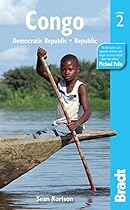
The Congo - Democratic Republic of the Congo.
Weather in Africa:
Local weather forecasts for destinations around Africa.
More From Travel Notes
Travel Notes Online Guide to Travel
Africa - Asia - Caribbean - Europe - Middle East - North America - Oceania - South America.

The Travel Notes Online Guide to Travel helps visitors plan their trip with country and city travel guides, local tourist information, reviewed web sites, and inspiring travel content.
Travel and Tourism Guides on Travel Notes
If Travel Notes has helped you, please take a moment to like us on Facebook and share with your friends on social media.
Travel Resources
.
Travel & Tourism With Industry Professionals.
